
In the world of digital products, continuous improvement is key to a good user experience. These products are never finished — they constantly evolve. To get the best results, gathering feedback is crucial. We use multiple channels including analytics, surveys, and direct communication with internal stakeholders and real customers. There are cases when these feedback channels seamlessly complement each other, as I want to describe in this article.
Identifying the problem
In a recent project on our main eCommerce solution, Danfoss Product Store, analytics tools detected unusual behavior — but the cause remained unclear. Only by getting feedback directly from our users did the problem come into focus. We found that the main features on the front page were unclear and sometimes confusing.
Addressing the problem
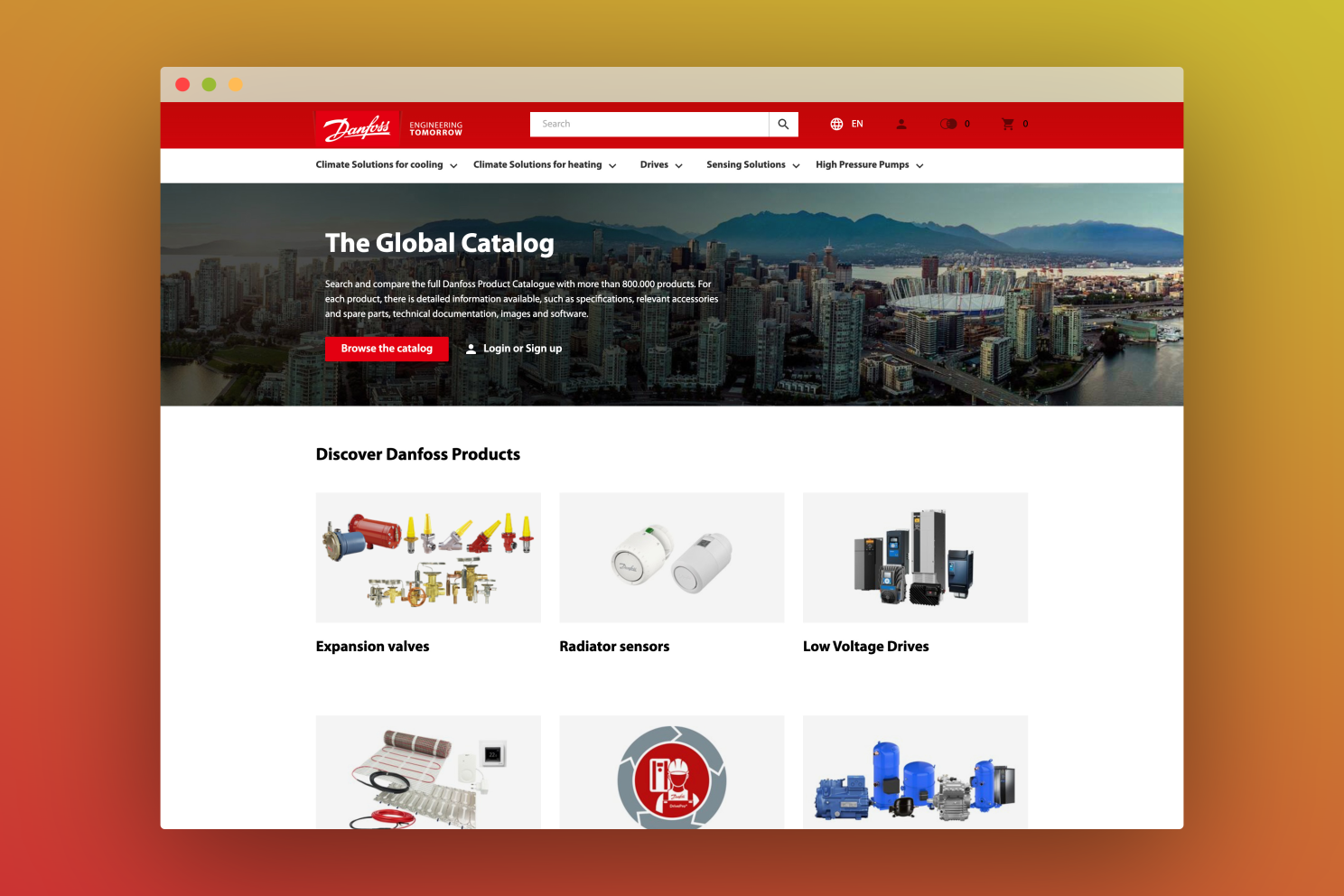
During the redesign, I used user feedback alongside an AI-powered tool, Feng-GUI. This heat-map analytics tool not only validated some design decisions but also revealed additional areas for improvement. For example, it highlighted that the visibility of the global search feature was poor due to its hidden placement. We decided to replace it with a search input field, which is also fully in line with the principles of our Mosaic design system.
Results achieved
Through the redesign process, we achieved meaningful improvements:
- Enhanced the product area and improved search visibility.
- Provided users with an alternative way to browse the catalog by combining all Danfoss segments on an intermediate page.
- Aligned the design elements with our Mosaic design system, creating a more cohesive experience.
To assess the impact, I performed analysis using the heat-map tool, as well as testing on real users. The data clearly showed better performance of the redesigned solution, and the findings backed our decisions.
Conclusion
In this project, traditional analytics tools identified the problem, and newer AI tools helped confirm we were on the right path to solving it. The redesigned solution has been implemented, and we’ll continue to observe its performance in the real environment. The next step is implementing personalised features in the product area, allowing customers to optimise their interaction based on individual preferences.